Lucy Finally Reaches the Trojans: Eurybates and Its Tiny Moon Are Up First in August 2027
Jupiter drags two swarms of ancient asteroids around the Sun with it. No spacecraft has ever visited one. Six years after launch, NASA's Lucy is due to fly past the first, along with a moon about a kilometer wide.
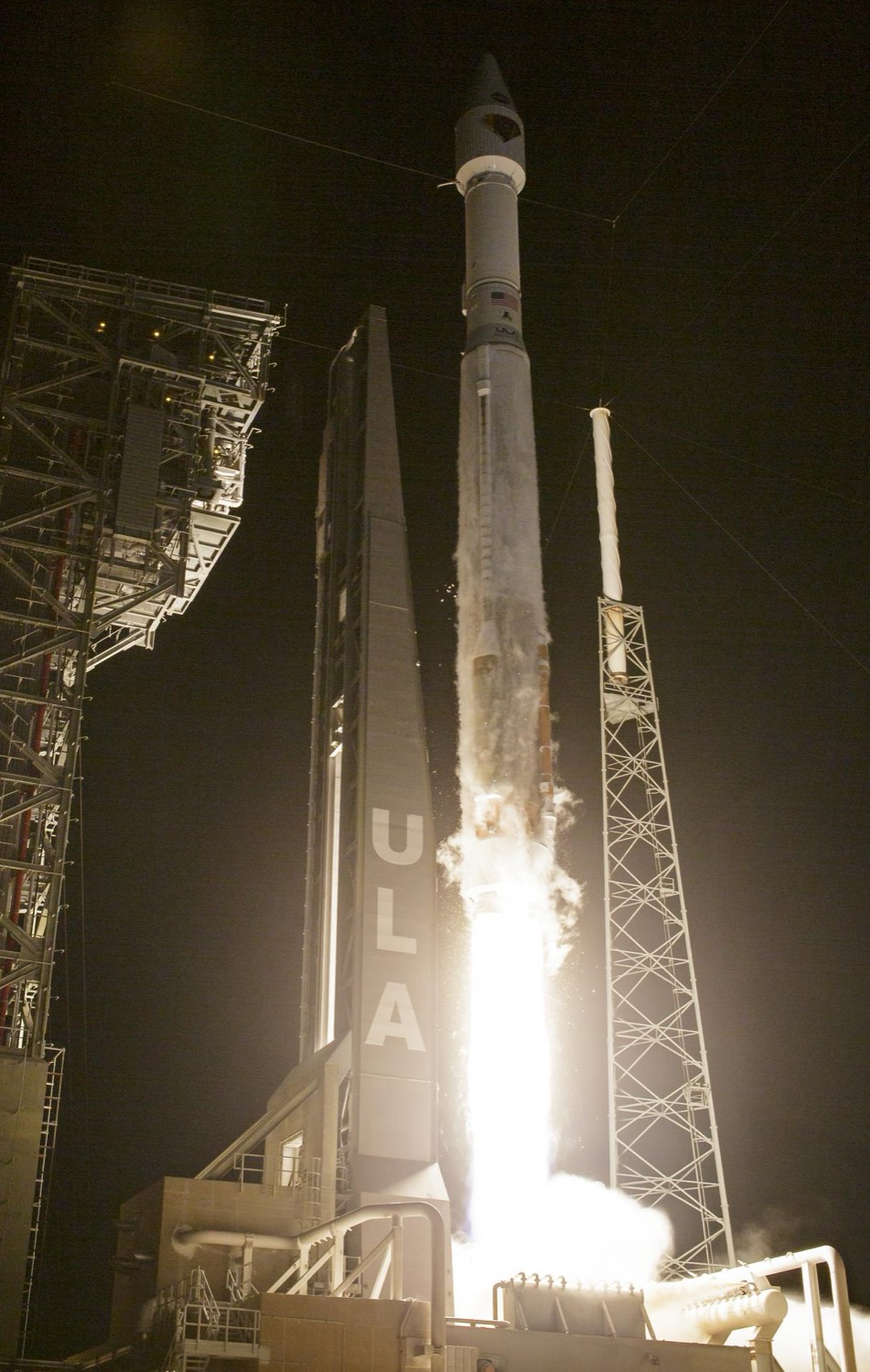
The Atlas V rocket carrying Lucy lifts off from Cape Canaveral Space Force Station, Florida, on October 16, 2021.
Photo: NASA/Bill Ingalls (public domain)
Jupiter doesn't travel around the Sun alone. Sixty degrees ahead of it, and sixty degrees behind it, two vast swarms of asteroids share its orbit, held in place by a balance between the gravity of the Sun and the giant planet. These are the Trojan asteroids. There are many thousands of them, and nobody has ever seen one up close.
That changes in August 2027.
A mission named after a fossil
Lucy is named after the famous 3.2-million-year-old human ancestor whose skeleton was found in Ethiopia in 1974. That fossil changed our understanding of human origins. The mission's builders hope the Trojans, which are thought to be leftovers from the formation of the outer planets, can do something similar for the solar system.
The connection goes further. The scientists who found the fossil named it after the Beatles song "Lucy in the Sky with Diamonds," which was playing at their camp, and the spacecraft carries a plaque with messages for the far future.
The long road so far
Lucy launched on October 16, 2021 on an Atlas V rocket from Florida. Since then it has:
- swung past Earth twice for gravity assists, in 2022 and 2024,
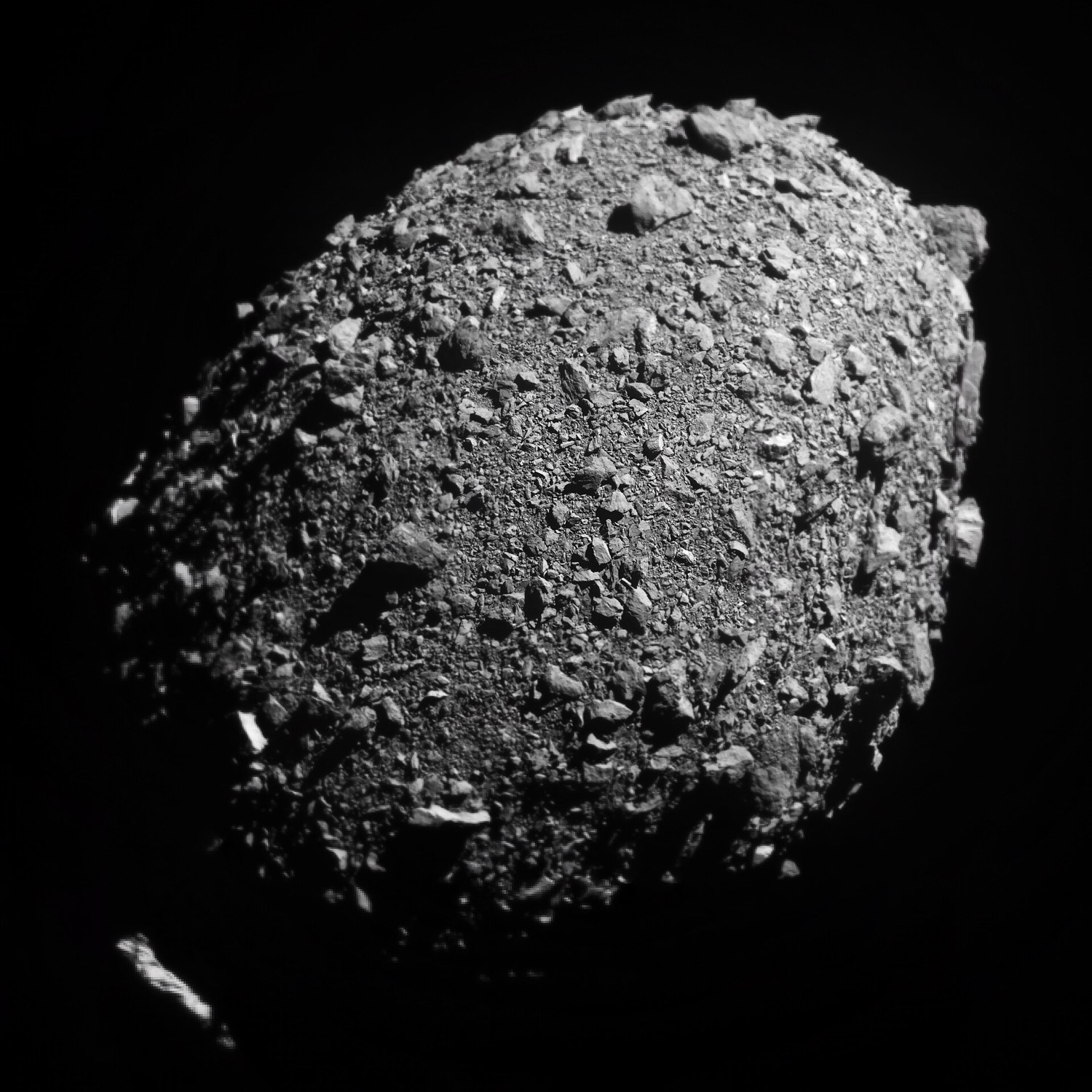
- flown by the small main-belt asteroid Dinkinesh in November 2023, and found it had a moon that is itself two lobes stuck together, now called Selam,
- flown past asteroid Donaldjohanson, named after the paleoanthropologist who found the Lucy fossil, in April 2025.
Those were warm-ups. The Trojans are why it exists.
First stop: Eurybates and Queta
Eurybates is roughly 64 kilometers across, the largest member of a family of asteroids thought to have formed when a bigger body broke apart. In 2020, the Hubble Space Telescope spotted a tiny moon orbiting it, only about a kilometer wide. It was named Queta.
The mission timeline lists the encounter for August 12, 2027. Published trajectory data put closest approach late on August 11 in Universal Time, a difference that's mostly down to time zones. Lucy is expected to pass at around 1,000 kilometers, close enough to map the surface, measure the color and composition, and get a good look at Queta.
Six years in space, three asteroids already in the logbook, and the mission's real work begins in August 2027.
The rest of the tour
Eurybates is the first of a string of Trojan flybys:
| Target | Planned flyby |
|---|---|
| Eurybates and Queta | August 2027 |
| Polymele (and its small moon) | September 15, 2027 |
| Leucus | April 2028 |
| Orus | November 2028 |
| Patroclus and Menoetius (binary) | March 2033 |
After the 2028 flybys Lucy loops back toward Earth for another gravity assist, then heads out to the trailing Trojan swarm to meet Patroclus and Menoetius, a pair of similar-sized bodies orbiting each other.
Why the Trojans matter
The Trojans are thought to be among the most primitive objects in the solar system. Their colors vary a lot, from grey to deep red, which hints they may have formed in different regions before being captured into Jupiter's orbit as the giant planets shifted around early on. Studying several different Trojans up close should help test those ideas about how the planets settled into their current places.
A reminder of how slow, and patient, exploration is
It's easy to forget how long these missions take. Lucy launched before many of today's undergraduates finished high school, and its last flyby is scheduled for 2033. In August 2027, it reaches the place it was built for. We'll be watching the downlink like everyone else.
Sources and further reading
- Southwest Research Institute, Lucy mission timeline
- NASA, Lucy mission overview
- Hubble Space Telescope discovery of Eurybates' satellite Queta (2020)
Calculated times assume the locations named in the story and can shift slightly elsewhere. Found a mistake? Send a correction.