The South Texas Fireball That Left Rocks Behind, and What to Do If It Happens Near You
In February 2023 a space rock about the size of a carry-on bag blew apart over the Rio Grande Valley. Weather radar helped hunters find pieces on a ranch within days. Here's how that worked, and how to tell a real meteorite from a parking-lot rock.
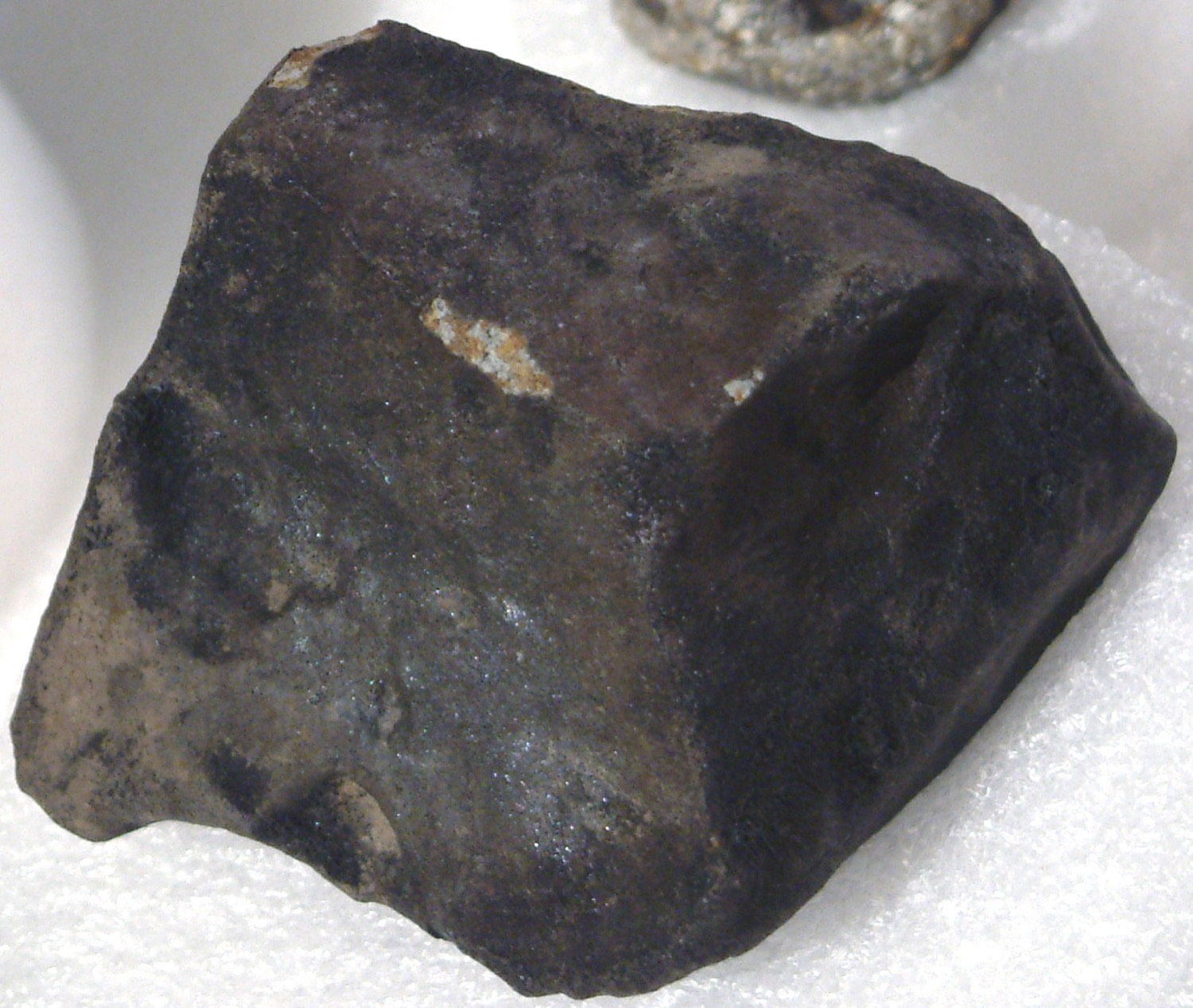
A piece of the Park Forest meteorite, which fell on suburban Chicago in 2003, showing the thin black fusion crust that forms as a meteorite plunges through the air.
Photo: James St. John via Wikimedia Commons, CC BY 2.0
On the late afternoon of February 15, 2023, people across the Rio Grande Valley heard a boom loud enough to rattle windows, and some saw a bright streak in a sky that was still light. Local authorities fielded calls about an explosion. It wasn't one. It was a rock from space.
What NASA pieced together
NASA's Meteoroid Environment Office worked out the basics within a day or so. The object was roughly two feet across and weighed in the region of 1,000 pounds before it hit the atmosphere. It came in at around 27,000 miles per hour and broke apart about 21 miles up, releasing energy equal to something like eight tons of TNT. That breakup is what made the boom.
Most of it vaporized. But not all. Radar and other data suggested that some fragments had survived and fallen to the ground west of McAllen, and NASA released a map of the likely "strewn field," the strip of land where pieces should be.
How radar found falling rocks
Here's the clever part. The National Weather Service's NEXRAD radars are built to see rain, hail and birds. Falling meteorite fragments, tumbling down after their glowing phase has ended, also show up on those radars as faint returns that don't behave like weather.
Meteorite hunters have learned to look for these signatures in archived radar data after a fireball. Combine them with wind data, since the fragments drift on the way down, and you can narrow a search area from a whole county to a few square miles.
That's what happened in South Texas. Within days, Robert Ward, a member of the American Meteor Society and an experienced hunter, found a fragment on a private ranch in Starr County. More pieces followed.
Weather radar can spot falling meteorites. That's one of the stranger sentences in modern astronomy, and it's true.
Texas has done this before
This isn't new territory for the state. Near Odessa there's a meteor crater, made by an iron meteorite tens of thousands of years ago, which you can visit. Texas has also produced many recorded meteorite finds over the years, thanks to a lot of open, dry ground where a dark stone stands out.
Is your rock a meteorite?
Most aren't. Collectors and museums get many "meteor-wrongs" for every real one. A few checks help.
- Fusion crust. A fresh meteorite usually has a thin, dark crust, like the stone in the photo above, formed when the outside melted on the way down. It's often black or dark brown and can look a bit like matte paint.
- Weight. Most meteorites contain metal and feel heavier than an ordinary rock of the same size.
- Magnet. The majority of meteorites, including the common stony kind, contain enough iron-nickel metal to attract a strong magnet.
- No bubbles. Rocks full of holes, like foam or a sponge, are usually volcanic rock or industrial slag, not meteorites.
- Streak. Rub it on the unglazed back of a ceramic tile. A red-brown or black streak often points to hematite or magnetite, two common lookalikes.
Whose rock is it?
In the United States, a meteorite generally belongs to whoever owns the land it landed on. That's why the Starr County search happened with ranch owners' permission. Don't go hunting on private land without asking. Many parks and public lands have their own rules, and collecting may be banned outright.
If you see a fireball
Report it. The American Meteor Society runs an online form that works for observers anywhere in the world. Note the time, which direction it travelled, how long it lasted, and whether you heard anything afterwards. A sound arriving a minute or more later is a strong hint that the object got low enough to drop rocks. If several people report the same event, those reports help pin down where any pieces fell, and occasionally that's how a new meteorite gets found.
Sources and further reading
- NASA Meteoroid Environment Office statements on the February 15, 2023 Texas fireball
- American Meteor Society, fireball reports
- Smithsonian National Museum of Natural History, meteorite identification
Calculated times assume the locations named in the story and can shift slightly elsewhere. Found a mistake? Send a correction.